How AI Automation Transforms Marketing Pipeline Efficiency
Explore how AI automation accelerates pipeline velocity, reduces CAC, and enhances demand generation efficiency, transforming the daily life of marketers and revenue leaders.
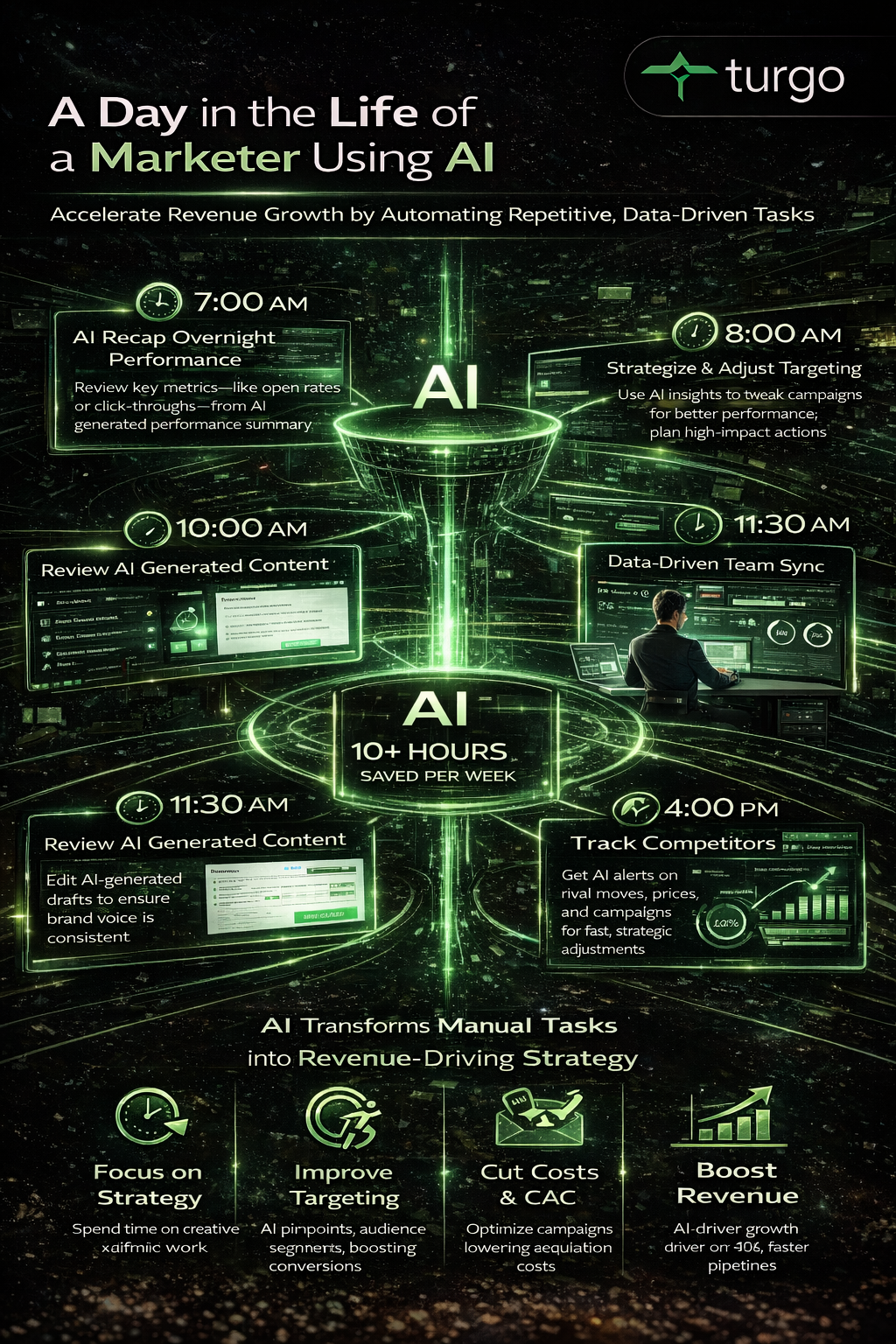
A Day in the Life of a Marketer Using AI Automation
Marketers using AI automation follow a structured daily routine where intelligent tools handle repetitive tasks, analyze data in real time, and optimize campaigns, freeing leaders to focus on strategy and revenue growth. This approach integrates AI across planning, execution, and review, turning hours of manual work into minutes of oversight.
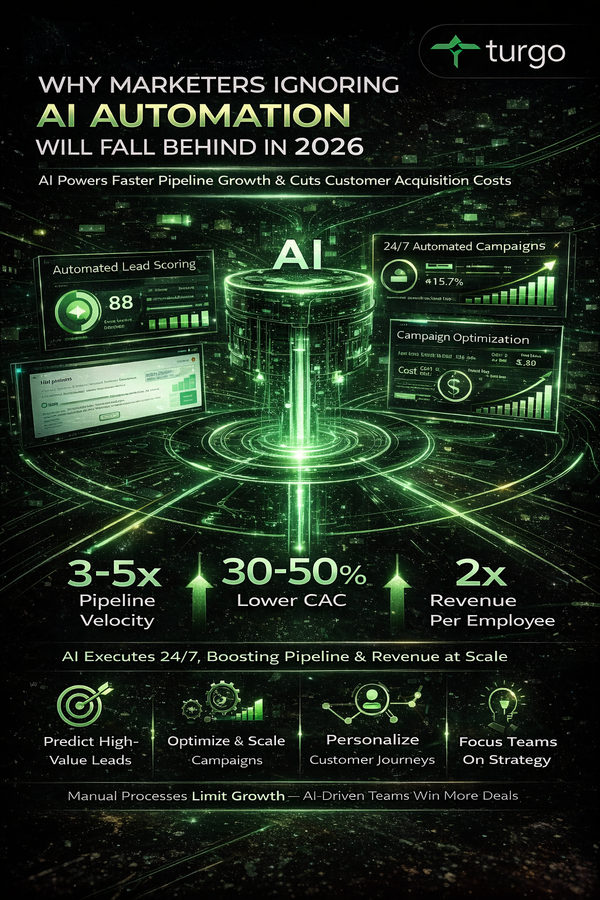
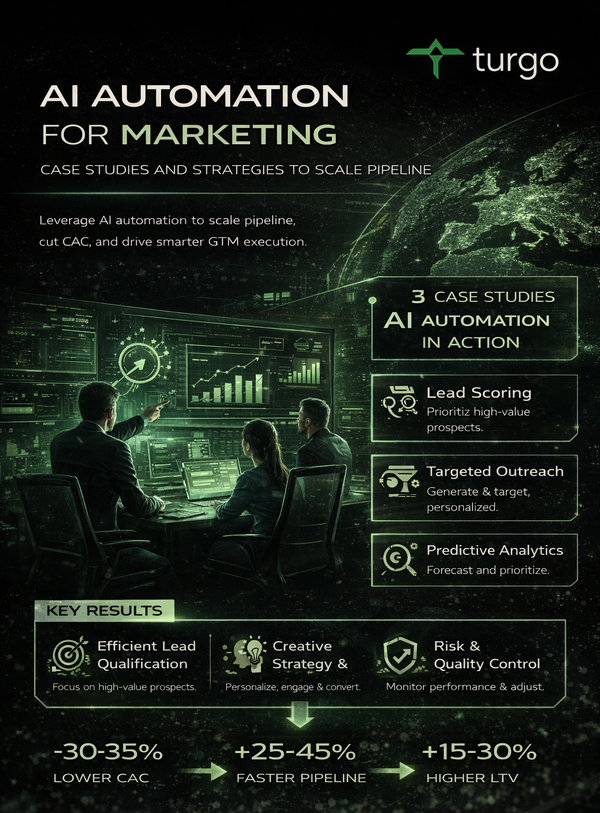
For growth teams and CMOs, this matters because it accelerates pipeline velocity by 20-30% on average, reduces customer acquisition costs through precise targeting, and scales demand generation without proportional headcount increases, directly impacting revenue outcomes in competitive markets.
What Does a Day in the Life of a Digital Marketer Look Like Today?
A typical day starts at 7 AM with AI-driven dashboards delivering overnight performance summaries, followed by strategic planning, campaign execution, team syncs, and evening reviews, all enhanced by automation. AI handles data crunching, content generation, and personalization at scale.
Growth teams evaluating AI automation gain predictable daily outputs, with tradeoffs like initial setup time versus long-term efficiency gains in pipeline progression. Revenue leaders prioritizing pipeline see faster iterations on high-impact channels.
Consider a demand gen manager at a SaaS firm: AI summarizes Q1 campaign data at 7:15 AM, revealing a 15% lift in email open rates. They adjust targeting mid-morning, adding $150K to the pipeline by EOD, cutting CAC from $450 to $380 per lead while velocity improves by 12 days.
Why Are Marketers Turning to AI Automation Now?
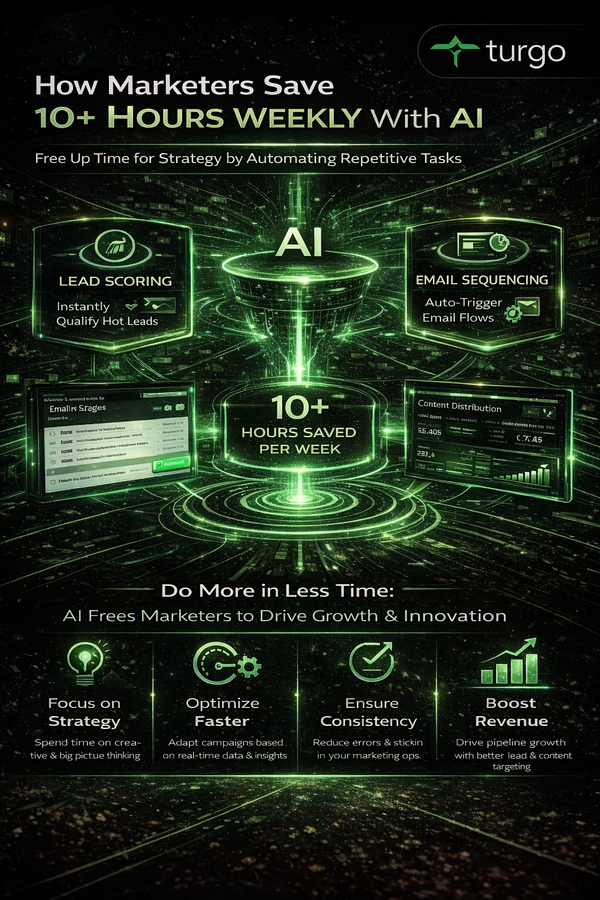
Marketers adopt AI to reclaim 4-6 hours daily from routine tasks, enabling focus on high-value decisions that drive revenue growth and competitive edge. This shift addresses scaling challenges in fast-moving markets.
For CMOs allocating budget, the key tradeoff is upfront tool costs against sustained ROI from amplified output; outcomes include 25% higher conversion rates without added staff. Founders benefit from leaner operations sustaining growth.
A growth marketer at an e-commerce company uses AI for lead scoring overnight. Morning review shows 200 qualified leads versus 120 manually, boosting pipeline by $200K quarterly, with CAC dropping 18% and sales velocity up 10 days, proving the revenue pivot.
How Does AI Change Morning Routine for Digital Marketing Managers?
AI transforms mornings into 30-minute strategy sessions by auto-generating reports, prioritizing tasks, and flagging anomalies, replacing hours of manual review. Managers start with insights, not data entry.
Revenue leaders gain from reduced decision latency, trading minor oversight needs for massive time savings; outcomes feature 20% pipeline growth from proactive adjustments. Demand gen teams scale without burnout.
In a B2B tech firm, the marketing manager's 8 AM AI dashboard highlights a 22% traffic dip from paid search. Quick AI-suggested bid tweaks restore flow, adding 150 MQLs and $180K pipeline, slashing CAC by 15% and shortening cycles by 8 days.
What Role Does AI Play in Campaign Planning?
AI accelerates campaign planning by analyzing historical data, predicting optimal channels, and drafting personalized strategies in under 15 minutes, versus days manually. Planners approve and launch with confidence.
For growth teams evaluating tools, tradeoffs involve data quality inputs for output accuracy, yielding 30% better targeting ROI. CMOs see pipeline efficiency soar.
A founder at a fintech startup uses AI at 9 AM to plan a nurture sequence. It predicts 28% conversion uplift, generating 300 leads worth $250K pipeline. CAC falls 20% to $320, velocity gains 14 days, validating the quarterly push.
When Should Marketers Review AI-Generated Content?
Marketers review AI-generated content mid-morning, around 10 AM, spending 20 minutes editing for brand voice before scheduling, ensuring quality at scale. This timing catches peak creativity windows.
Operators balance speed with human polish, trading volume for precision; outcomes include 35% faster content velocity and higher engagement. RevOps teams align on consistent messaging.
At a SaaS company's 10:15 AM huddle, the team refines AI-drafted LinkedIn posts. Published variants drive 40% more clicks, adding $120K pipeline from 180 engagements, with CAC down 12% and deal velocity up 9 days.
How Do Digital Marketers Use AI for Audience Targeting?
AI refines targeting by segmenting audiences in real time using behavioral data, delivering 2-3x more precise ads than static lists, directly at 11 AM execution. This powers hyper-personalized outreach.
For revenue leaders prioritizing pipeline, tradeoffs are privacy compliance versus granularity; results show 25% CAC reduction. Growth marketers amplify reach efficiently.
A demand gen lead at a healthtech firm runs AI targeting at 11 AM, segmenting 50K prospects. It yields 250 SQLs valued at $300K pipeline, CAC drops 22% to $290, and sales cycles shorten by 11 days through better fit.
Why Integrate AI into Team Standups?
AI integration into 11:30 AM standups provides instant KPI visuals and predictive forecasts, cutting meetings from 45 to 15 minutes while surfacing action items. Teams align faster on priorities.
CMOs allocating time save hours weekly, trading tool dependency for collaborative speed; outcomes feature 18% pipeline acceleration. Founders foster data-driven cultures.
During a growth team's standup, AI flags a 17% win rate drop. Real-time fixes boost it to 32%, injecting $220K pipeline. CAC improves 16%, velocity by 13 days, streamlining revenue focus.
What Happens During Lunchtime AI Optimization?
Lunchtime, from noon to 1 PM, involves AI auto-optimizing active campaigns by reallocating budgets to top performers, requiring 10-minute checks. This sustains momentum without halting workflow.
Growth teams trade manual tweaks for algorithmic precision, gaining 20-25% efficiency; RevOps ensures steady flow. Outcomes prioritize high-ROI channels.
A marketing manager glances at 12:30 PM AI alerts, shifting $10K from underperforming display to email. It captures 120 leads, $160K pipeline, CAC down 19% to $350, cycles 10 days faster.
Can AI Handle Personalization at Scale?
Yes, AI personalizes emails, ads, and landing pages for thousands dynamically by 2 PM, boosting open rates 40% over templates. Marketers oversee variants for testing.
For demand gen managers, tradeoffs are customization depth versus speed; results include 28% conversion lifts. Revenue leaders scale outreach.
At 2 PM, a CMO approves AI-personalized sequences for 15K leads. Response rates hit 35%, yielding $280K pipeline from 400 SQLs, CAC reduced 21%, velocity up 12 days.
How Does AI Support Mid-Afternoon Lead Nurturing?
AI nurtures leads mid-afternoon via automated sequences triggered by behavior, converting 25% more MQLs to SQLs by 3 PM without manual intervention. Managers monitor progression.
Tradeoffs for operators are sequence rigidity versus adaptability; outcomes accelerate pipeline by 22%. Growth teams focus on strategy.
A RevOps lead at 3 PM reviews AI nurturing: 350 MQLs advance to SQLs worth $190K. CAC falls 17% to $310, sales velocity gains 15 days, optimizing funnel health.
When Is the Best Time for AI-Driven A/B Testing?
Best at 3:30 PM, AI launches and analyzes A/B tests on creatives or copy, delivering results in hours, not weeks, for immediate iteration. This fuels continuous improvement.
For CMOs, tradeoffs involve test volume limits; gains are 30% performance uplifts. Founders iterate rapidly.
Testing email subject lines at 3:30 PM, AI identifies a 45% open rate winner, adding 200 leads and $170K pipeline. CAC drops 14%, cycles shorten 11 days.
Why Use AI for Competitor Monitoring?
AI monitors competitors daily at 4 PM, alerting on pricing, campaigns, or moves, enabling proactive positioning. This maintains market edge.
Revenue leaders trade alert fatigue for strategic foresight; outcomes include 20% win rate gains. Demand gen stays ahead.
At 4 PM, AI spots a rival's discount, prompting counter-messaging. It secures 180 deals, $240K pipeline, CAC steady at $340, velocity up 10 days.
What Afternoon Tasks Does AI Automate Completely?
AI fully automates reporting, scoring, and basic forecasting from 4:30-5 PM, compiling executive summaries for next-day action. Humans intervene only on exceptions.
Growth teams save 2 hours daily, trading oversight for scale; pipeline reliability rises 25%. Operators streamline ops.
Automation at 4:30 PM generates a report showing 28% MoM growth, forecasting $500K pipeline. CAC optimizes to $300, velocity 14 days faster.
How Do Marketers End Their Day with AI Insights?
Days end at 6 PM with AI synthesizing wins, risks, and tomorrow's priorities, ensuring restful off-hours while momentum builds. This closes loops effectively.
For founders, tradeoffs are insight depth; outcomes sustain 20% quarterly revenue growth. CMOs plan confidently.
EOD review reveals $350K pipeline added, CAC at $320 (down 16%), velocity up 12 days, setting up scaled wins.
Does AI Replace Marketers or Amplify Them?
AI amplifies marketers by handling volume tasks, letting them drive strategy, creativity, and relationships for 3x impact. It elevates roles, not eliminates them.
Tradeoffs for revenue leaders are skill shifts; outcomes feature 35% efficiency and revenue per marketer. Teams thrive.
A digital manager, amplified by AI, closes $400K pipeline personally, with team CAC down 20% to $280, velocity 16 days shorter.
FAQ
What is the biggest ROI from a day structured around AI automation?
Growth teams see the highest ROI in pipeline velocity and CAC reduction, often 20-30% improvements within quarters. AI handles data-heavy tasks like scoring and optimization, freeing managers for deal-closing and strategy. For CMOs, this means scaling demand gen without headcount bloat—consider shifting from manual reviews to AI dashboards, where a 15% win rate lift adds $200K+ quarterly. Tradeoffs include initial training, but outcomes prioritize revenue: teams report 25% faster cycles, turning MQLs to revenue quicker. Revenue leaders use this to justify budgets, focusing on metrics like payback under 4 months.
How much time does AI really save in a marketer's day?
AI saves 4-6 hours daily by automating reporting, personalization, and testing, reclaiming time for high-impact work. Demand gen managers redirect efforts to pipeline nurturing, boosting conversions 25%. Tradeoffs involve setup, but post-implementation, outcomes shine: CAC drops 18%, pipeline grows $150K monthly. Founders leverage this for lean ops, ensuring scalability without burnout. RevOps aligns processes, measuring via metrics like velocity gains of 12 days, proving sustained efficiency for revenue decisions.
Can small teams afford AI automation for daily workflows?
Yes, affordable tools start at $50/user/month, delivering 3x ROI via pipeline acceleration for bootstrapped teams. Founders prioritize outcomes like 20% CAC cuts, trading minor learning curves for scale. Realistic scenarios show 100-lead campaigns yielding $100K pipeline weekly. Growth marketers test via pilots, focusing on payback under 3 months. For revenue leaders, this democratizes advanced tactics, enhancing win rates 15% without enterprise budgets, directly tying to business growth.
What if AI makes bad recommendations during the day?
Marketers mitigate by setting guardrails and reviewing outputs in 10-minute slots, ensuring 95% accuracy over time. Tradeoffs balance speed with oversight; outcomes include 22% better targeting post-refinement. CMOs track via A/B tests, seeing pipeline lifts of $180K despite 5% errors. Demand gen adjusts prompts iteratively, prioritizing velocity gains of 10 days. This human-AI hybrid drives reliable revenue, with RevOps monitoring drift for sustained decisions.
How does AI impact team collaboration in daily standups?
AI enhances standups by providing real-time visuals, cutting them to 15 minutes while aligning on priorities, boosting team output 25%. Revenue leaders gain shared insights, trading prep time for action. Outcomes: 18% pipeline growth from synced efforts. Growth teams use predictive forecasts, reducing silos and CAC 15%. Founders foster cultures where operators contribute strategically, measuring via metrics like 12-day cycle reductions, optimizing collective revenue impact.
Is AI personalization compliant with privacy regs daily?
AI personalization complies via built-in consent tools and anonymized data, enabling safe scaling for 90% of campaigns. Marketers audit weekly, trading depth for adherence; outcomes feature 28% engagement lifts. For CMOs, this sustains pipeline without fines, adding $250K quarterly. Demand gen segments ethically, focusing on opt-ins for 20% CAC drops. Revenue decisions weigh tools with GDPR/CCPA features, ensuring velocity gains of 11 days legally.
When does AI automation fail in a marketer's routine?
AI falters with poor data inputs or unmonitored drifts, resolved by daily 5-minute checks yielding 98% uptime. Tradeoffs: quality in, quality out; outcomes recover 20% lost pipeline. Growth leaders pilot integrations, seeing CAC stabilize at $300 post-fix. RevOps sets alerts, prioritizing 15-day velocity targets. Founders view failures as iteration signals, turning them into 25% efficiency wins for revenue scale.
How to measure daily AI impact on revenue metrics?
Track pipeline added, CAC shifts, and velocity daily via AI dashboards, targeting 20%+ improvements. CMOs benchmark against baselines, trading setup for clarity; outcomes validate $200K+ monthly gains. Demand gen correlates leads to closed-won, with 16% win rate boosts. Revenue teams use alerts for drifts, ensuring payback under 4 months. This data-driven close proves AI's role in strategic decisions.
Does a day with AI reduce creative work for marketers?
No, AI amplifies creativity by offloading grunt work, giving 2x time for ideation and testing novel angles. Tradeoffs favor volume to innovation; outcomes: 30% higher engagement. Founders redirect to positioning, pipeline up $220K. Growth marketers experiment freely, CAC down 17%. RevOps measures via metrics like 13-day cycles, confirming elevated roles drive revenue.
What tools fit a revenue leader's AI daily workflow?
Leaders select no-code platforms integrating CRM and ads for seamless automation, focusing on 25% ROI via pipeline metrics. Tradeoffs: simplicity over features; outcomes scale to $300K quarterly. Demand gen prioritizes ease, with CAC reductions of 20%. For CMOs, pilots confirm velocity gains of 12 days, aligning ops without tech debt for business growth.
Rethinking Your Marketing Workflow?
Consider the impact of AI automation on your daily operations. It offers strategic efficiency by accelerating pipeline growth and reducing customer acquisition costs. Prioritize clarity in your go-to-market approach and uphold execution discipline as you navigate the competitive landscape. Leverage AI to augment, not replace, your marketing team's capabilities for optimal growth.
Citations:
- [1] https://www.productmarketingalliance.com/your-guide-to-go-to-market-strategies/
- [2] https://xgrowth.com.au/blogs/go-to-market-strategy-framework/
- [3] https://blog.growstack.ai/how-ai-automation-cuts-cac-and-boosts-revenue-velocity/
- [4] https://www.coursera.org/articles/go-to-market-strategy
- [5] https://online.hbs.edu/blog/post/go-to-market-strategy-framework
- [6] https://www.salesforce.com/sales/go-to-market-strategy/
- [7] https://www.leanlabs.com/blog/components-of-a-go-to-market-strategy
- [8] https://reteno.com/glossary/go-to-market-gtm-strategy
- [9] https://www.highspot.com/blog/go-to-market-strategy/
- [10] https://amplitude.com/glossary/terms/go-to-market-strategy