How AI Automation Can Transform Your Marketing ROI
Explore how AI automation can streamline your pipeline, enhance GTM efficiency, and reduce CAC for strategic revenue growth.
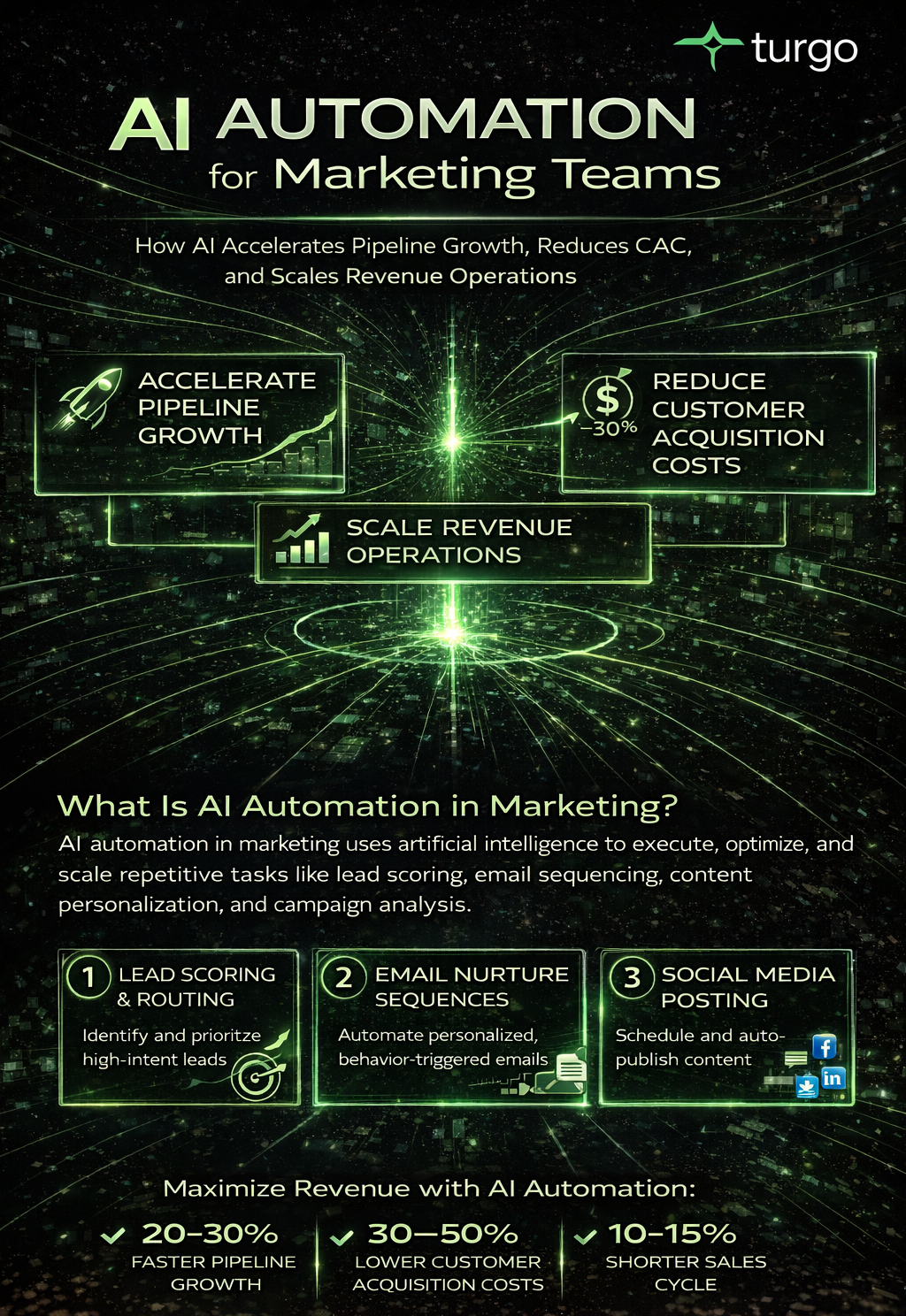
AI Automation for Marketing Teams
Meta Description: Learn how marketing teams use AI automation to accelerate pipeline growth, reduce customer acquisition costs, and scale revenue operations without expanding headcount.
What Is AI Automation in Marketing?
AI automation in marketing refers to the use of artificial intelligence systems to execute, optimize, and scale repetitive marketing and sales processes—from lead scoring and email sequencing to content personalization and campaign performance analysis. Rather than replacing marketers, these systems handle the mechanical work that consumes time, allowing teams to focus on strategy, creative decisions, and revenue outcomes.
For growth teams and CMOs evaluating budget allocation, AI automation addresses a fundamental business problem: how to maintain or increase pipeline velocity and conversion rates while managing flat or declining headcount. The systems learn from historical campaign data, customer behavior patterns, and market signals to make real-time decisions about who to target, when to engage them, and what message will resonate.
Why Does AI Automation Matter for Go-to-Market Strategy?
A go-to-market strategy is a comprehensive plan that outlines how a product or service will be positioned, priced, promoted, and distributed to a target audience. AI automation directly impacts three critical GTM outcomes: the speed at which you reach qualified prospects, the cost per acquisition, and the consistency of your messaging across channels.
Without automation, GTM execution depends on manual processes—spreadsheets, email lists, campaign scheduling, and lead routing. These processes introduce delays, inconsistency, and human error. AI automation removes these friction points by making decisions in real time based on customer behavior, market conditions, and historical performance data. For revenue leaders prioritizing pipeline growth, this means faster time-to-first-touch, higher engagement rates, and more predictable customer acquisition costs.
A typical scenario: a B2B SaaS company with a $10M ARR target and a 3-month sales cycle needs to generate 150 qualified leads per month to hit revenue goals. Manual lead scoring and nurturing can take 2–3 weeks to identify and route high-intent prospects. AI automation reduces this to 2–3 days, compressing the sales cycle by 10–15% and increasing monthly pipeline by 20–30% without additional headcount.
How Does AI Automation Fit Into Your GTM Framework?
AI automation operates across five core GTM functions: market definition, customer targeting, product messaging, distribution, and pricing. In market definition, AI systems analyze competitive positioning, market trends, and customer sentiment to help teams identify the most valuable segments. In customer targeting, AI builds dynamic buyer personas and identifies high-intent prospects in real time. For product messaging, AI personalizes value propositions based on customer segment, industry, and behavioral signals. In distribution, AI optimizes channel selection and timing. In pricing, AI recommends dynamic pricing strategies based on demand, competition, and customer willingness to pay.
The key insight for GTM leaders is that AI automation doesn't replace strategy—it accelerates execution and improves decision quality. Your GTM strategy still defines what you're selling, who you're selling to, and why your offering is differentiated. AI automation determines how efficiently you execute that strategy at scale.
Consider a demand generation team launching a new product line. The GTM strategy identifies three target segments and defines messaging for each. Without automation, the team manually builds email sequences, monitors engagement, and adjusts messaging based on weekly performance reviews. With AI automation, the system continuously tests messaging variations, identifies which segments respond to which messages, and automatically routes high-intent prospects to sales within hours of engagement. The result: 40% faster time-to-qualified-lead and 25% lower cost per acquisition.
What Processes Should You Automate First?
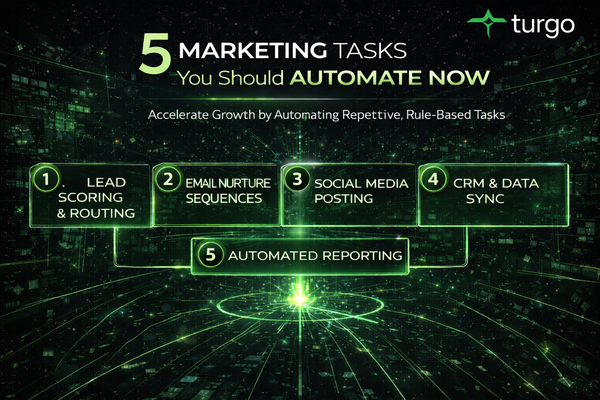
For CMOs and growth leaders allocating automation budget, the priority should be processes that directly impact pipeline velocity and CAC. Lead scoring and qualification rank first—these processes determine which prospects enter your sales pipeline and when. Email nurturing and sequencing rank second, as these drive engagement velocity and conversion rates. Content personalization ranks third, as it improves message-to-market fit and reduces churn in early-stage prospects.
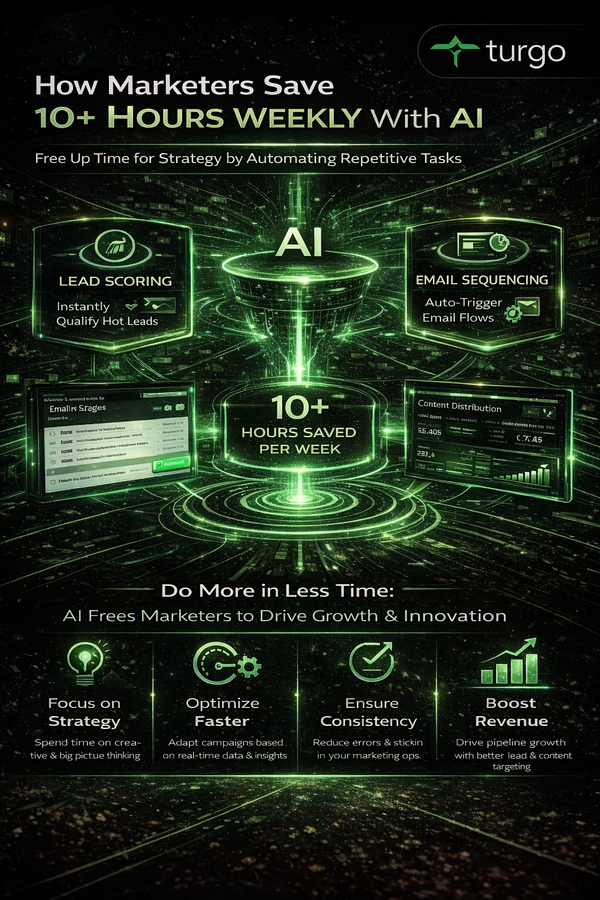
The business logic is straightforward: automate the processes that consume the most time, create the most errors, and have the highest impact on revenue. Lead scoring typically consumes 10–15 hours per week across a demand generation team and directly determines sales productivity. Automating this process frees capacity for strategy work while improving lead quality by 20–30%.
A realistic example: a B2B marketing team of four people manages 500 inbound leads per month. Manual lead scoring takes 8 hours per week and relies on inconsistent criteria. Implementing AI-driven lead scoring reduces manual effort to 2 hours per week (monitoring and threshold adjustment only) and increases the percentage of leads that convert to opportunities by 25%. Over a year, this frees 312 hours of team capacity and generates an additional $500K in pipeline.
How Do You Measure the ROI of AI Automation?
Revenue leaders and CFOs evaluating automation investments need clear metrics tied to business outcomes. The primary metrics are customer acquisition cost (CAC), sales cycle length, pipeline velocity, and conversion rate by stage. Secondary metrics include cost per lead, lead-to-opportunity conversion rate, and marketing-influenced revenue.
The measurement framework is straightforward: establish baseline metrics for your current process, implement automation, and measure the same metrics 30, 60, and 90 days post-implementation. Most teams see measurable improvement within 30 days, with full optimization occurring by day 90 as the system learns from data.
A concrete scenario: a company with a $5M annual marketing budget and a 25% CAC-to-LTV ratio implements AI-driven lead scoring and nurturing. Baseline metrics: 500 leads per month, 10% lead-to-opportunity conversion, 3-month sales cycle, $2,000 CAC. After 90 days: 550 leads per month (10% increase from improved targeting), 13% lead-to-opportunity conversion (30% improvement), 2.7-month sales cycle (10% compression), $1,750 CAC (12.5% reduction). Annual impact: $250K in CAC savings and $400K in accelerated pipeline.
What Data Do You Need to Start?
AI automation systems require historical data to learn patterns and make predictions. The minimum viable dataset includes 6–12 months of customer interaction history: email engagement (opens, clicks, replies), website behavior (pages visited, time on site, content downloads), sales activity (calls, meetings, proposals), and customer outcomes (won/lost deals, deal size, sales cycle length).
For growth teams without this data, the recommendation is to begin with a smaller automation scope—perhaps email sequencing or content recommendations—while building the historical dataset. Most teams can begin seeing ROI within 30–60 days even with limited data, as the system learns and improves continuously.
A practical scenario: a startup with 18 months of customer data implements AI-driven lead scoring. The system has enough historical data to identify patterns (e.g., prospects who visit pricing pages and download case studies convert at 3x the rate of those who don't). Within 30 days, the system has scored 2,000 historical leads and identified 150 high-intent prospects that were previously missed by manual scoring. Sales closes 35% of these prospects within 60 days, generating $300K in unexpected pipeline.
How Does AI Automation Improve Customer Targeting?
Customer targeting—identifying and reaching the right prospects at the right time—is where AI automation delivers the highest ROI for most teams. AI systems analyze behavioral signals (website visits, content engagement, email interactions), firmographic data (company size, industry, growth rate), and intent signals (search keywords, review site activity, competitive mentions) to identify prospects most likely to buy.
The business advantage is precision. Manual targeting relies on static criteria (e.g., "companies with 50–500 employees in SaaS"). AI targeting is dynamic and probabilistic—it identifies prospects with the highest likelihood of conversion based on hundreds of behavioral and contextual signals. This increases conversion rates and reduces wasted outreach to low-intent prospects.
Example: a B2B marketing team targets mid-market SaaS companies. Manual targeting identifies 200 companies matching the profile. AI automation analyzes these 200 companies and identifies 40 with high purchase intent based on recent funding, hiring growth, and competitive product searches. Sales focuses on these 40 companies, achieving a 35% conversion rate versus the typical 8% rate for the broader list. Result: 5x more efficient sales effort and 4x higher pipeline per outreach dollar.
Can AI Automation Handle Personalization at Scale?
Personalization—tailoring messaging, content, and offers to individual prospects—is one of the highest-impact applications of AI automation. At scale, manual personalization is impossible. AI systems can generate personalized email subject lines, body copy, and content recommendations for thousands of prospects simultaneously, based on their industry, role, company size, and engagement history.
The outcome is higher engagement and conversion rates. Personalized emails have 2–3x higher open rates and 5–10x higher click-through rates compared to generic campaigns. For revenue leaders, this translates directly to pipeline growth and lower CAC.
Realistic scenario: a demand generation team sends 10,000 emails per month to prospects across 15 industries and 8 job functions. Generic campaigns achieve 18% open rate and 2% click-through rate. AI-driven personalization generates unique subject lines and body copy for each prospect based on their industry and role. Open rates increase to 28% and click-through rates to 4.5%. This generates 250 additional qualified conversations per month with zero increase in team size or budget.
What's the Relationship Between AI Automation and Sales Enablement?
Sales enablement—providing sales teams with the tools, content, and information they need to close deals—is directly enhanced by AI automation. AI systems can recommend the most relevant case studies, product demos, and pricing information for each prospect based on their industry, company size, and stage in the buying process. They can also flag high-intent prospects for immediate sales outreach and provide sales teams with real-time insights about prospect engagement and objections.
For revenue operations leaders, this means sales teams spend less time searching for content and more time selling. It also means more consistent deal progression and higher win rates.
Example: a sales team of 12 people manages 500 active opportunities. Without automation, reps spend 3–4 hours per week searching for relevant content and preparing for calls. AI automation recommends content based on prospect profile and buying stage, reducing prep time to 30 minutes per week. This frees 36–48 hours per week across the team, equivalent to one full-time rep. Additionally, AI flags 20 high-intent prospects per week that would have been missed, generating $400K in additional pipeline per quarter.
How Do You Avoid Over-Automation and Maintain Human Touch?
A common concern among marketing and sales leaders is that AI automation will make customer interactions feel robotic or impersonal. The reality is more nuanced: AI automation handles the mechanical work (lead scoring, email sequencing, content recommendations), while humans handle the strategic and relationship-building work (strategy, creative decisions, complex negotiations, relationship management).
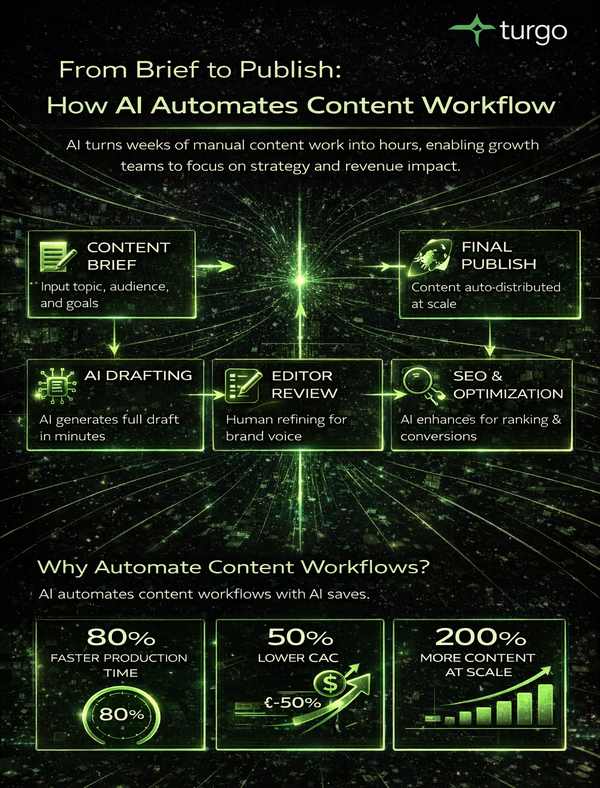
The key is to use automation to enable human judgment, not replace it. Sales reps should review AI-recommended prospects before outreach. Marketing teams should review AI-generated messaging before sending. This hybrid approach maintains quality and human judgment while capturing the efficiency gains of automation.
Practical approach: a demand generation team implements AI-driven email sequencing. The system generates email sequences based on prospect behavior and engagement history. Before sending, the team reviews sequences for tone, accuracy, and brand alignment. This takes 2 hours per week versus 20 hours for manual sequencing, while maintaining quality and brand voice.
What's the Difference Between AI Automation and Traditional Marketing Automation?
Traditional marketing automation platforms (like HubSpot, Marketo, Pardot) execute predefined workflows based on static rules. For example: "If prospect opens email AND clicks link, then send follow-up email." These systems are powerful but require humans to define every rule and workflow.
AI automation systems learn from data and make decisions dynamically. They identify patterns humans might miss, adapt to changing conditions, and optimize continuously without manual intervention. For example: "Based on this prospect's industry, company size, engagement history, and competitive signals, send this specific message at this specific time to maximize conversion probability."
For CMOs evaluating tools, the distinction matters. Traditional automation is better for simple, repeatable workflows. AI automation is better for complex decisions that require pattern recognition and continuous optimization. Most mature teams use both: traditional automation for foundational workflows and AI automation for high-impact, complex decisions.
Scenario: a company uses traditional automation to send welcome emails to all new leads (simple, repeatable workflow). It uses AI automation to identify which leads are high-intent and should receive immediate sales outreach (complex decision requiring pattern recognition). This hybrid approach captures the efficiency of automation while maintaining decision quality.
How Does AI Automation Impact Your Sales Cycle?
Sales cycle length—the time from first contact to closed deal—is one of the most important metrics for revenue leaders. AI automation compresses sales cycles by accelerating prospect engagement, improving lead quality, and enabling faster deal progression.
The mechanisms are: (1) faster time-to-first-touch through automated lead routing, (2) higher engagement rates through personalized messaging, (3) faster qualification through AI-driven lead scoring, and (4) faster deal progression through AI-recommended next steps and content.
Most teams see 10–20% compression in sales cycle length within 90 days of implementing AI automation. For a company with a 6-month sales cycle and $10M annual revenue target, a 15% compression (27 days) translates to $1.25M in accelerated pipeline.
Example: a B2B company with a 4-month sales cycle implements AI-driven lead scoring and nurturing. High-intent prospects are identified and routed to sales within 24 hours (versus 2 weeks manually). Personalized nurturing increases engagement velocity. AI recommends next steps based on prospect behavior. Sales cycle compresses to 3.4 months (15% reduction). With 100 deals per year, this generates $1.2M in accelerated revenue.
What Are the Common Pitfalls When Implementing AI Automation?
For growth leaders and operators implementing AI automation, common pitfalls include: (1) automating the wrong processes (low-impact, low-frequency tasks), (2) insufficient data quality (garbage in, garbage out), (3) over-reliance on automation without human oversight, (4) failure to measure and optimize, and (5) poor change management and team adoption.
The recommendation is to start small, measure rigorously, and expand gradually. Automate high-impact, high-frequency processes first. Ensure data quality before implementation. Maintain human oversight and review. Establish clear metrics and review them weekly. Invest in team training and change management.
Realistic scenario: a company implements AI lead scoring without adequate data quality. The system learns from incomplete or inaccurate historical data and makes poor predictions. Sales team loses confidence in the system. After 60 days, adoption is only 40%. The company pauses the project, cleans the data, and re-implements with proper governance. Second implementation succeeds because data quality is high and team expectations are aligned.
How Do You Choose Between Building Custom AI or Using Existing Platforms?
For revenue leaders and CTOs evaluating build versus buy, the decision depends on your scale, technical capability, and timeline. Existing platforms (HubSpot, Salesforce, Marketo, specialized AI tools) offer faster time-to-value, lower upfront cost, and lower technical risk. Custom-built systems offer more flexibility and can be optimized for your specific business logic.
The recommendation for most teams is to start with existing platforms. They're mature, well-supported, and deliver ROI within 30–90 days. Custom-built systems make sense only if you have specific business logic that existing platforms can't support and you have the technical capability to build and maintain them.
Scenario: a mid-market company evaluates building a custom lead scoring system versus using an existing platform. Custom build: 6-month timeline, $200K cost, requires ongoing maintenance. Existing platform: 30-day implementation, $50K annual cost, includes support and updates. The company chooses the existing platform, achieves ROI within 60 days, and can upgrade or switch platforms if needed.
What's the Role of AI Automation in Competitive Positioning?
For CMOs and growth leaders, AI automation is becoming table stakes in competitive positioning. Companies that automate high-impact processes achieve faster time-to-market, lower CAC, and higher conversion rates. This creates a competitive advantage that compounds over time.
The strategic implication is that companies that delay AI automation adoption will fall behind on efficiency metrics and may struggle to compete on price or speed. For growth teams evaluating budget allocation, AI automation should be a priority investment, not a nice-to-have.
Market reality: in competitive markets, companies using AI automation achieve 20–30% lower CAC and 15–25% faster sales cycles compared to competitors using traditional methods. Over 2–3 years, this compounds into significant market share and profitability advantages.
How Should You Plan Your AI Automation Roadmap?
For revenue leaders and operators planning AI automation implementation, the roadmap should prioritize processes by impact and feasibility. High-impact, high-feasibility processes (lead scoring, email sequencing, content recommendations) should be first. High-impact, lower-feasibility processes (dynamic pricing, predictive churn) should be second. Lower-impact processes should be deprioritized.
The timeline should be realistic: 30 days for planning and setup, 30 days for implementation and initial optimization, 30 days for full optimization and scaling. Most teams see measurable ROI by day 60 and full ROI by day 120.
Roadmap example: Month 1–2: Implement AI lead scoring and qualification. Month 3–4: Implement AI-driven email sequencing and personalization. Month 5–6: Implement AI-driven content recommendations and sales enablement. Month 7–12: Optimize, scale, and expand to additional use cases.
FAQ
What's the minimum team size to benefit from AI automation?
AI automation delivers ROI for teams of any size, but the benefit increases with scale. A team of 3–5 people managing 100–200 leads per month will see 15–20% efficiency gains. A team of 20+ people managing 5,000+ leads per month will see 30–40% efficiency gains. The key is that automation frees time for strategy and optimization work, which has higher ROI than manual execution. Even small teams benefit by redirecting freed capacity toward higher-value activities like strategy, creative, and relationship building.
How long does it take to see ROI from AI automation?
Most teams see measurable improvement within 30 days and full ROI within 90 days. The timeline depends on data quality, implementation complexity, and team adoption. Teams with clean historical data and strong change management see faster ROI. Teams with poor data quality or low adoption see slower ROI. The recommendation is to establish baseline metrics before implementation, measure weekly for the first 90 days, and plan for full optimization by day 120. If you're not seeing improvement by day 60, pause and diagnose the issue (usually data quality or adoption).
Does AI automation require significant technical resources?
Modern AI automation platforms are designed for non-technical users. Most implementations require 2–4 weeks of setup and configuration, which can be done by marketing operations or revenue operations teams without engineering support. The main technical requirement is data integration—connecting your CRM, marketing automation platform, and other data sources. Most platforms offer pre-built connectors and support teams to handle this. Custom-built systems require engineering resources, but existing platforms do not.
What happens if your data quality is poor?
Poor data quality is the most common reason AI automation implementations fail. If your historical data is incomplete, inaccurate, or biased, the AI system will learn from bad data and make poor predictions. The solution is to invest in data quality before implementation. This typically takes 2–4 weeks and involves cleaning historical records, standardizing data formats, and removing duplicates. The investment is worth it—teams that prioritize data quality see 2–3x better ROI from automation.
Can AI automation work for B2C marketing?
Yes, AI automation is highly effective for B2C marketing. The applications are slightly different: instead of lead scoring, you might use AI for customer segmentation and personalization. Instead of sales enablement, you might use AI for product recommendations and dynamic pricing. The core principle is the same: use AI to identify patterns in customer behavior and optimize engagement and conversion. B2C teams often see higher ROI from automation because they manage larger volumes of customers and interactions.
How do you handle privacy and compliance with AI automation?
Privacy and compliance (GDPR, CCPA, etc.) are critical considerations. The recommendation is to implement AI automation within your existing compliance framework. Most modern platforms include privacy controls, consent management, and audit trails. The key is to ensure that AI automation respects customer preferences, doesn't use data beyond what customers have consented to, and maintains transparency about how data is used. Work with your legal and compliance teams to ensure your implementation meets regulatory requirements.
What's the difference between predictive and prescriptive AI automation?
Predictive AI identifies patterns and makes predictions (e.g., "This prospect has a 65% probability of converting"). Prescriptive AI goes further and recommends actions (e.g., "Send this prospect this message at this time to maximize conversion probability"). Prescriptive AI is more powerful but requires more sophisticated systems and better data. Most teams start with predictive AI (lead scoring, churn prediction) and graduate to prescriptive AI (recommended actions, dynamic messaging) as they mature.
How do you maintain brand voice and messaging consistency with AI automation?
The recommendation is to use AI for personalization and optimization while maintaining human oversight of messaging and brand voice. Set clear brand guidelines and messaging frameworks, then use AI to personalize within those guidelines. For example: define 3–5 core value propositions and 10–15 key messages, then use AI to select which messages resonate with each prospect and personalize the delivery. This maintains brand consistency while capturing the benefits of personalization.
What's the biggest mistake companies make with AI automation?
The biggest mistake is automating the wrong processes or automating without clear metrics. Companies often automate low-impact processes (e.g., social media posting) while ignoring high-impact processes (e.g., lead scoring). Or they implement automation without establishing baseline metrics, making it impossible to measure ROI. The recommendation is to prioritize by impact, establish clear metrics before implementation, and measure rigorously. Start with high-impact, high-feasibility processes and expand from there.
How do you know when you're ready to scale AI automation?
You're ready to scale when: (1) you've achieved measurable ROI on your initial implementation (typically 30–60 days), (2) your team is comfortable with the system and adoption is above 80%, (3) your data quality is high and improving, and (4) you have clear metrics and optimization processes in place. Most teams are ready to scale by day 90. The scaling process involves expanding to additional use cases, increasing automation scope, and optimizing based on performance data.
Ready to Accelerate Your Revenue Growth?
Consider the power behind a well-executed growth strategy. Reevaluate your pipeline development, improve your CAC efficiency, and clarify your go-to-market tactics to drive disciplined execution. The key to sustainable growth lies not in revolutionary ideas, but in strategic, revenue-focused decision making.
Citations:
- [1] https://www.productmarketingalliance.com/your-guide-to-go-to-market-strategies/
- [2] https://blogs.turgo.ai/the-revenue-impact-of-automating-key-marketing-tasks/
- [3] https://xgrowth.com.au/blogs/go-to-market-strategy-framework/
- [4] https://reteno.com/glossary/go-to-market-gtm-strategy
- [5] https://online.hbs.edu/blog/post/go-to-market-strategy-framework
- [6] https://www.coursera.org/articles/go-to-market-strategy
- [7] https://www.salesforce.com/sales/go-to-market-strategy/
- [8] https://www.leanlabs.com/blog/components-of-a-go-to-market-strategy
- [9] https://www.highspot.com/blog/go-to-market-strategy/
- [10] https://amplitude.com/glossary/terms/go-to-market-strategy