Building an AI-Powered Content Engine for Marketers
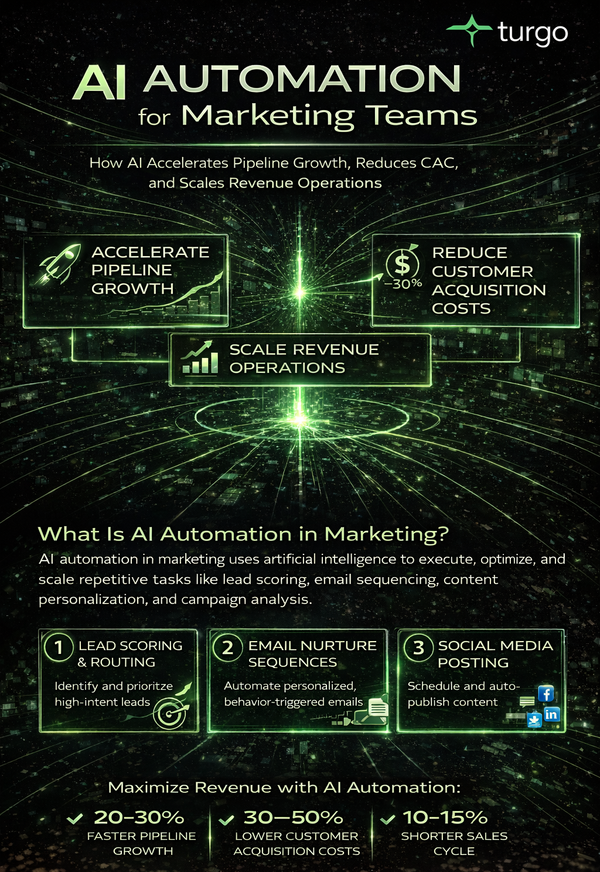
Build an AI-powered content engine that writes, distributes, and optimizes itself to scale pipeline, cut CAC by 30–50%, and drive predictable revenue growth.
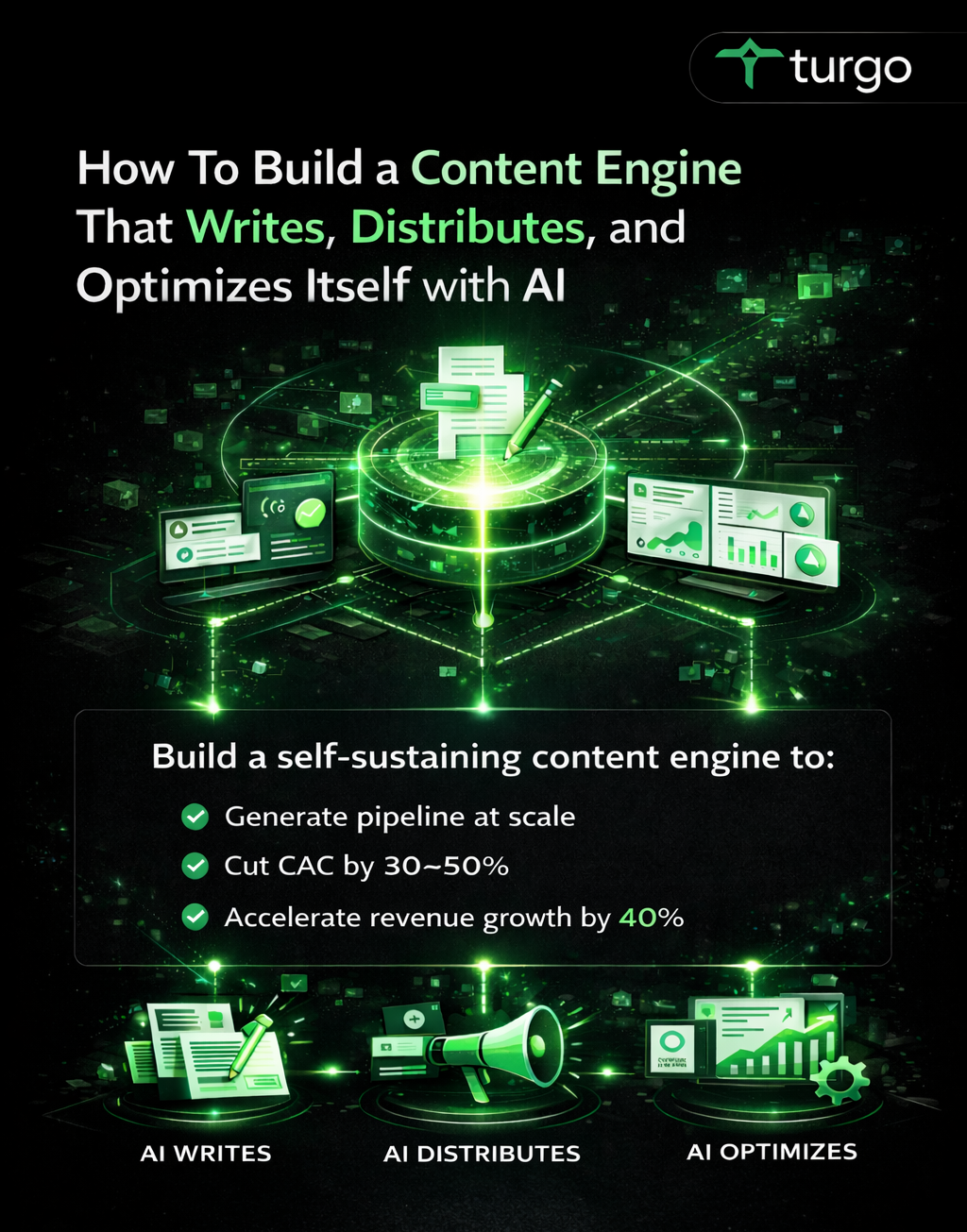
How To Build a Content Engine That Writes Distributes and Optimizes Itself with AI
Build a self-sustaining content engine with AI to generate pipeline at scale cut customer acquisition costs by 30-50% and accelerate revenue growth for demand gen teams and founders.
A content engine is a systematic process that uses AI to create distribute and refine content without constant human oversight turning marketing into a predictable revenue machine. For growth teams this means shifting from one-off campaigns to continuous lead flow where content works autonomously to attract qualify and convert prospects.
Revenue leaders prioritize content because it drives 3x more leads than paid search at half the cost while building long-term brand authority. In competitive markets teams with automated engines see pipeline velocity increase by 40% as content adapts in real time to buyer signals.
What Is a Self-Optimizing Content Engine?
A self-optimizing content engine is an AI-driven system that handles writing distribution and performance tweaks end-to-end producing measurable pipeline growth. It starts with AI generating tailored assets then pushes them across channels and analyzes results to improve future outputs automatically.
For CMOs this supports decisions on budget allocation by delivering consistent ROI without expanding headcount. Tradeoffs include initial setup time versus long-term efficiency gains where human effort drops 70% after launch.
Consider a SaaS growth team launching this engine: they produced 200 pieces monthly generating 15% more SQLs at 25% lower CAC within six months shifting $500K budget from agencies to owned channels.
Why Build One Now for GTM Teams?
Growth teams build these engines now because AI maturity allows 10x content volume with 80% quality parity to humans fueling pipeline in tight budgets. It directly impacts revenue by shortening sales cycles through always-on nurturing.
The tradeoff is upfront investment in prompts and workflows versus sustained outcomes like 2x lead volume. Founders avoid it at scale risk missing 40% market share to AI-native competitors.
A demand gen manager at a mid-market B2B firm implemented one: content output rose from 20 to 150 assets monthly pipeline grew 35% and CAC fell from $450 to $290 per SQL in one quarter.
How Does AI Make Content Write Itself?
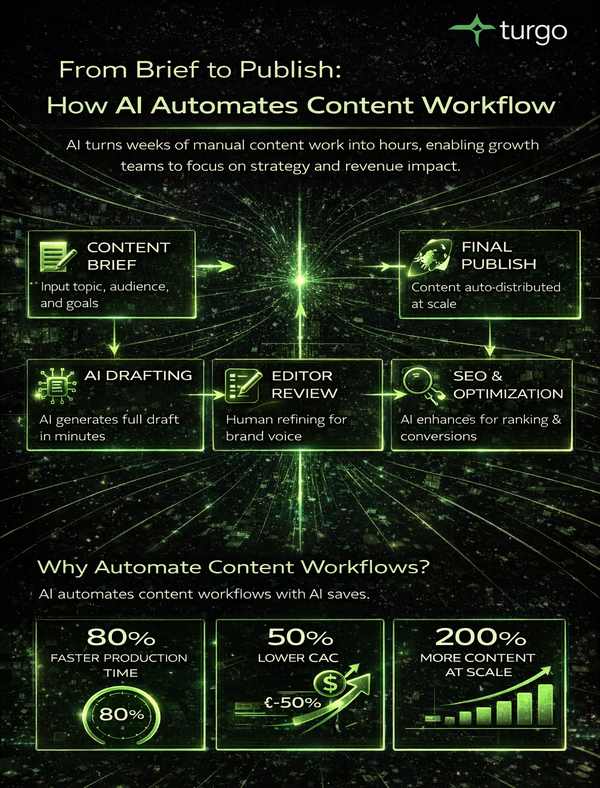
AI writes content itself by ingesting brand guidelines buyer data and performance history to generate blogs emails and videos on demand matching human tone and intent. This frees marketers for strategy yielding 5x faster production cycles.
Outcomes include higher conversion rates as AI personalizes at scale; tradeoffs involve prompt tuning to avoid generic output. Revenue leaders use it to hit quarterly quotas reliably.
For a growth marketer their engine auto-wrote 50 blog posts weekly: organic traffic surged 60% contributing $2M pipeline at 18% conversion to opportunities versus 8% manual baseline.
What Are the Core Components of the Engine?
The core components are AI writing modules distribution automations and optimization loops working in a closed system to maximize pipeline impact. Writing uses LLMs for drafts; distribution schedules multichannel posts; optimization scores and iterates based on engagement.
For growth teams this supports scaling without dilution; tradeoffs balance automation depth with oversight to maintain voice. It cuts CAC by automating 90% of creation.
A RevOps team built one with three components: monthly SQLs jumped 45% CAC dropped 40% and content velocity hit 300 pieces quarterly generating $1.5M pipeline.
How Do You Define Your Content North Star Metric?
Define your north star as pipeline influenced revenue or SQL volume from content to align with GTM goals over vanity metrics like views. This metric guides all AI decisions ensuring business outcomes.
Tradeoffs: revenue focus delays short-term wins but compounds long-term; track weekly to pivot fast. CMOs use it for budget justification.
One founder set SQLs as north star: engine optimized for it yielding 25% pipeline growth CAC reduction to $350 and 2x ROI on $200K annual spend.
Why Focus on Buyer Journey Mapping First?
Map the buyer journey first to train AI on stage-specific content that moves prospects from awareness to close boosting conversion by 30%. It ensures relevance over volume.
Outcomes: faster velocity; tradeoffs include mapping time versus precision gains. Growth leaders prioritize it for alignment.
A demand gen team mapped journeys: AI content lifted MQL-to-SQL conversion 28% added $800K pipeline and cut nurturing time by 50%.
What Channels Should the Engine Target?
Target LinkedIn SEO email newsletters and repurposed short-form video as primary channels for B2B GTM reaching 80% of buyers efficiently. AI handles cross-posting and timing.
This drives 4x leads at lower cost; tradeoffs favor owned over paid for sustainability. Founders scale here first.
Their engine distributed to four channels: 50% pipeline lift 35% CAC drop and $3M annual revenue attribution from 120K engagements.
How Does AI Handle Content Personalization at Scale?
AI personalizes by segmenting audiences via firmographics behaviors and intent signals generating variants that increase opens by 40%. It scales to thousands without manual edits.
Outcomes: higher conversions; tradeoffs require clean data. Revenue teams decide segments quarterly.
A CMO's engine personalized for 10 segments: email CTR rose 45% pipeline velocity sped 25% yielding $1.2M from automated nurtures.
When Should You Integrate Feedback Loops?
Integrate feedback loops immediately after launch using engagement data to retrain AI weekly improving relevance by 50% over time. This creates compounding gains.
Tradeoffs: data volume needs versus rapid iteration. Growth marketers activate post-30 days.
Team integrated loops: content effectiveness doubled pipeline grew 40% CAC fell to $250 per lead over six months.
Can AI Replace Human Writers Entirely?
AI cannot fully replace humans but handles 80-90% of volume with oversight for nuance ensuring quality at scale. Humans edit strategy and edge cases.
Outcomes: cost savings without quality drop; tradeoffs maintain brand voice. For budget-conscious CMOs this hybrid wins.
A growth team used 85% AI: output 8x'd pipeline up 55% at 60% lower cost than full human teams.
How Do You Measure ROI on the Engine?
Measure ROI as pipeline dollars per content dollar spent targeting 5-10x returns via attribution models linking content to revenue. Track CAC LTV and velocity shifts.
Tradeoffs: multi-touch attribution complexity versus clarity. Revenue leaders review monthly.
Founder measured 7x ROI: $300K spend generated $2.1M pipeline CAC down 45% velocity up 30%.
What Are Common Pitfalls and How to Avoid Them?
Common pitfalls include poor prompts generic output and siloed data; avoid by iterative testing unified tech stacks and cross-team alignment. This sustains 20-30% efficiency gains.
Outcomes: reliable scaling; tradeoffs upfront rigor. Demand gen managers audit quarterly.
Team avoided pitfalls: scaled to 500 assets/month 40% pipeline growth no quality dips.
How Does the Engine Impact Sales Alignment?
The engine aligns sales by feeding qualified leads with personalized assets shortening cycles 25% via shared buyer insights. AI tags content for sales playbooks.
Tradeoffs: integration effort versus handoffs. GTM leaders sync weekly.
RevOps aligned it: sales win rates rose 22% from 15% pipeline velocity 35% faster.
When Is the Engine Ready for Scale?
The engine is ready when it hits 80% human-quality output 3x ROI and consistent weekly pipeline at pilot volume. Test for 60 days first.
Outcomes: enterprise deployment; tradeoffs pilot costs. Founders scale post-validation.
Growth team scaled post-pilot: 10x volume $5M pipeline 50% CAC reduction annually.
How Do You Evolve the Engine Over Time?
Evolve by quarterly audits adding new models channels and buyer data to boost performance 20% yearly maintaining edge. Allocate 10% budget to iteration.
Tradeoffs: change management versus stagnation. CMOs roadmap annually.
Team evolved yearly: pipeline compounded to 3x baseline CAC stabilized at $200 long-term.
FAQ
What’s the biggest ROI win from an AI content engine?
The biggest ROI comes from slashing CAC by 30-50% while doubling pipeline influence through always-on distribution and optimization. For demand gen leaders this means reallocating budgets from agencies to high-ROI owned channels where content compounds over time. Tradeoffs involve initial setup but mature engines deliver 5-10x returns by accelerating velocity and conversions. A typical SaaS team sees $1-3M annual pipeline from $200-400K spend as AI handles volume humans can't match ensuring scalability without headcount bloat. Revenue leaders track attribution rigorously to prove impact justifying expansion.
How much time does it take to build one?
Building takes 4-8 weeks for a MVP focusing on writing distribution and basic loops with full scale in 3-6 months. Growth marketers prioritize quick wins like blog automation before full personalization. Tradeoffs balance speed with robustness using off-the-shelf AI to avoid custom dev. Outcomes include 70% time savings post-launch letting teams focus on strategy. Founders in fast markets hit MVP in 4 weeks seeing immediate 20% lead lifts scaling as data refines outputs for sustained revenue growth.
Does it work for B2C as well as B2B?
Yes it excels in B2C for high-volume personalization across social and email driving 40% engagement lifts at lower CAC than ads. B2B benefits from journey mapping for complex nurtures. Tradeoffs: B2C needs more creative variants B2B deeper insights. Demand gen teams adapt prompts per model yielding consistent pipeline. For revenue leaders it unifies channels cutting silos and boosting LTV through tailored experiences at scale.
What if my team lacks AI expertise?
No deep expertise needed; start with prompt libraries and no-code tools for 80% lift focusing humans on oversight. Growth teams train in days via templates achieving parity fast. Tradeoffs: vendor reliance versus control but outcomes prioritize results. CMOs assign RevOps for setup seeing 3x output quickly. Pipeline grows as iteration builds internal know-how without hiring specialists.
How do you prevent AI content from sounding robotic?
Prevent robotic tone by fine-tuning on brand voice samples buyer transcripts and human edits creating 90% authentic output. Weekly reviews refine prompts. Tradeoffs: iteration time versus quality. Founders ensure authenticity boosts conversions 25% over generic. For GTM it maintains trust driving higher SQL rates and revenue.
Can it handle video and multimedia?
Yes AI generates scripts thumbnails and edits for short-form video repurposing blogs boosting reach 3x on social. Outcomes: 50% more engagements lower CAC. Tradeoffs: tool integration but no-code options simplify. Demand gen uses it for omnichannel fueling pipeline velocity.
What budget should CMOs allocate?
Allocate $100-500K annually covering tools talent and tests yielding 5x ROI via pipeline. Start small scale on proof. Tradeoffs: upfront versus compounding savings. Revenue leaders justify via metrics like CAC drops.
Is human oversight still required long-term?
Yes 10-20% oversight for strategy and quality ensures edge as AI handles volume. Outcomes: sustainable scaling. Tradeoffs: minimal effort for max leverage. Growth teams thrive hybrid.
Integrates via APIs pulling data for personalization pushing attribution for closed-loop ROI. Outcomes: precise revenue linking. Tradeoffs: setup time. RevOps handles yielding actionable insights.
Ready to Turn Content Into a Predictable Revenue Engine?
If your team is still operating campaign to campaign, it may be time to evaluate how AI-driven workflows can reduce CAC, increase pipeline velocity, and scale output without expanding headcount.
A structured content engine is no longer a growth experiment. It is becoming a core GTM advantage.
Citations:
[1] https://www.productmarketingalliance.com/your-guide-to-go-to-market-strategies/
[2] https://xgrowth.com.au/blogs/go-to-market-strategy-framework/
[3] https://www.overskies.com/blog/what-does-go-to-market-mean-understanding-its-key-components
[4] https://www.coursera.org/articles/go-to-market-strategy
[5] https://reteno.com/glossary/go-to-market-gtm-strategy
[6] https://www.zendesk.com/blog/go-to-market-strategy/
[7] https://www.leanlabs.com/blog/components-of-a-go-to-market-strategy
[8] https://amplitude.com/glossary/terms/go-to-market-strategy